
A missing tooth affects more than your smile. It changes how you chew, allows neighboring teeth to shift, accelerates bone loss in the jaw, and affects your confidence in ways that compound over time. A dental bridge fixes all of that — permanently, without surgery, and faster than most patients expect.
At Thrive Dental & Orthodontics in Dallas, we place a same-day temporary bridge at your preparation appointment so you walk out with a functional restoration on day one. We use the Medit intraoral scanner for all bridge procedures — no goopy impressions, no gagging, no mess. Our permanent bridges are fabricated from premium Emax and Zirconia ceramics at high-quality partner labs. And we show your digital X-rays directly on the TVs in your treatment room so you see exactly what we see and understand your treatment clearly before committing to anything.
We’re on the corner of Frankford and Preston Road. Get directions. Book your consultation or call (214) 306-8088.
A dental bridge is a fixed, non-removable restoration that spans the gap left by a missing tooth. It consists of an artificial tooth — called a pontic — held permanently in place by dental crowns cemented onto the natural teeth on either side of the gap. Those anchor teeth are called abutments.
Unlike a partial denture, a bridge doesn’t come in and out — it functions and is cared for like natural teeth. For patients who want a fixed, stable tooth replacement without surgery, a bridge is one of the most reliable and time-tested options available.
Bridges work best when the adjacent anchor teeth are healthy and structurally sound, and when the bone supporting the gap is adequate. This is one reason bone grafting at the time of extraction is so important — it preserves the bone volume that a bridge needs for proper support and long-term aesthetics. If you’re planning ahead after a recent extraction, bone grafting at that appointment significantly improves your bridge options later.
Patients sometimes consider leaving a gap — particularly for a back tooth that isn’t visible. This is almost always a decision they come to regret. Here’s what happens when a missing tooth goes unreplaced:
Neighboring teeth shift. Without a tooth holding space, adjacent and opposing teeth gradually migrate toward the gap over months and years — causing misalignment, bite problems, and crowding that’s harder and more expensive to address than the original gap.
Bone loss accelerates. The jawbone beneath a missing tooth begins to resorb within weeks — losing height and density without a root to stimulate it. Once significant bone loss has occurred, bridge candidacy can be compromised and the aesthetic result of any restoration deteriorates as surrounding tissue sinks.
Chewing efficiency decreases. A single missing back tooth changes how bite force is distributed across remaining teeth — accelerating wear on teeth now doing more than their share.
The cost of waiting rises. A bridge placed promptly after extraction — especially when bone grafting was performed — is straightforward. A bridge placed years later, after neighboring teeth have shifted and bone has resorbed, may require additional preparatory work. Waiting almost always costs more than acting.
We use the Medit intraoral scanner at our Dallas office for all bridge procedures — a professional-grade 3D scanning system that captures a precise digital model of your prepared teeth and surrounding bite in minutes. No trays, no putty, no gagging, no mess. The digital file goes directly to our dental lab electronically with exceptional accuracy — bridges fabricated from digital scans fit better and more consistently than those made from physical impressions.
The Medit scanner is used across all restorative and orthodontic procedures at our Dallas office — the same precision technology whether you’re getting a bridge, a crown, whitening trays, or orthodontic aligners.
After your teeth are prepared, we fabricate and place a same-day temporary bridge before you leave your preparation appointment. Your prepared teeth are fully protected. Your bite and appearance are maintained. You’re not walking around with a visible gap or sensitive exposed teeth while waiting one to two weeks for the permanent bridge.
Patients consistently tell us the transition from temporary to permanent feels seamless — they’ve been wearing something functional and natural-looking since day one.
Our Dallas bridges are fabricated from the same premium ceramic materials we use for dental crowns:
Emax lithium disilicate — for front teeth and highly visible areas. Emax has a natural translucency and light-reflecting depth that closely mimics natural tooth enamel. A well-made Emax bridge is virtually indistinguishable from surrounding natural teeth when properly color-matched.
Zirconia — for back teeth where durability under bite forces matters most. Zirconia handles the significant chewing pressure of posterior teeth without the fracture risk of older porcelain-fused-to-metal designs. Extremely strong, biocompatible, and long-lasting.
Both are fabricated at high-quality partner labs from precise Medit digital scans — the combination of premium materials and digital accuracy produces consistently excellent results.
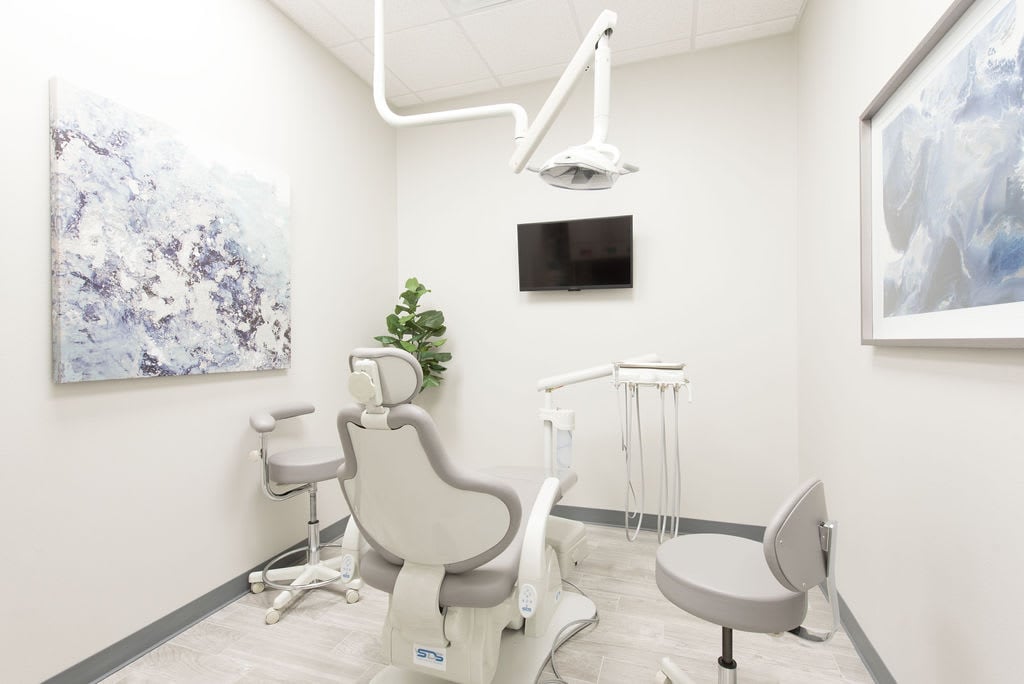
At our Dallas office, digital X-rays and intraoral photos are displayed on the TVs in your treatment room before any treatment discussion begins. You see exactly what your dentist sees — the gap, the adjacent teeth, the bone support beneath — and understand why a bridge is recommended and what the plan involves before committing to anything. For patients who want to understand their own treatment rather than simply be told what to do, this is one of the most valued aspects of our Dallas office.
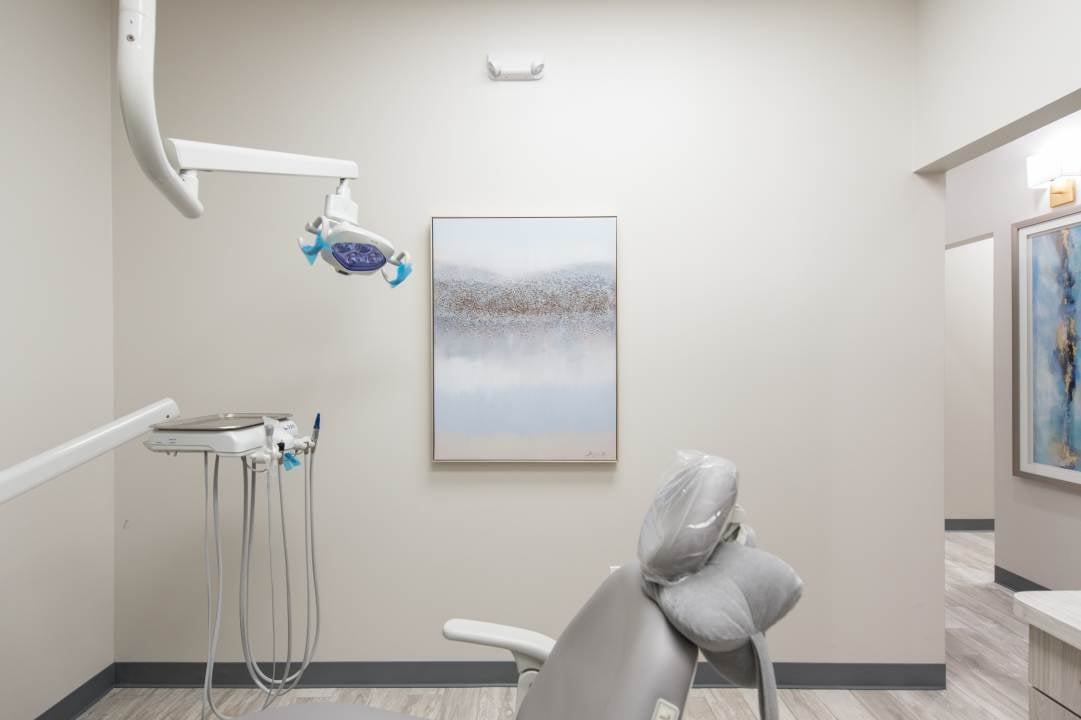
Bridge preparation appointments run 60–90 minutes. Every operatory at our Dallas location has two TVs — one above the chair and one at eye level — with Netflix throughout. Comfort headphones in every room. A pillow and blanket if you want them. A warm towel ends the appointment. For a procedure that takes the better part of an hour, these details make a real difference in how the experience feels.
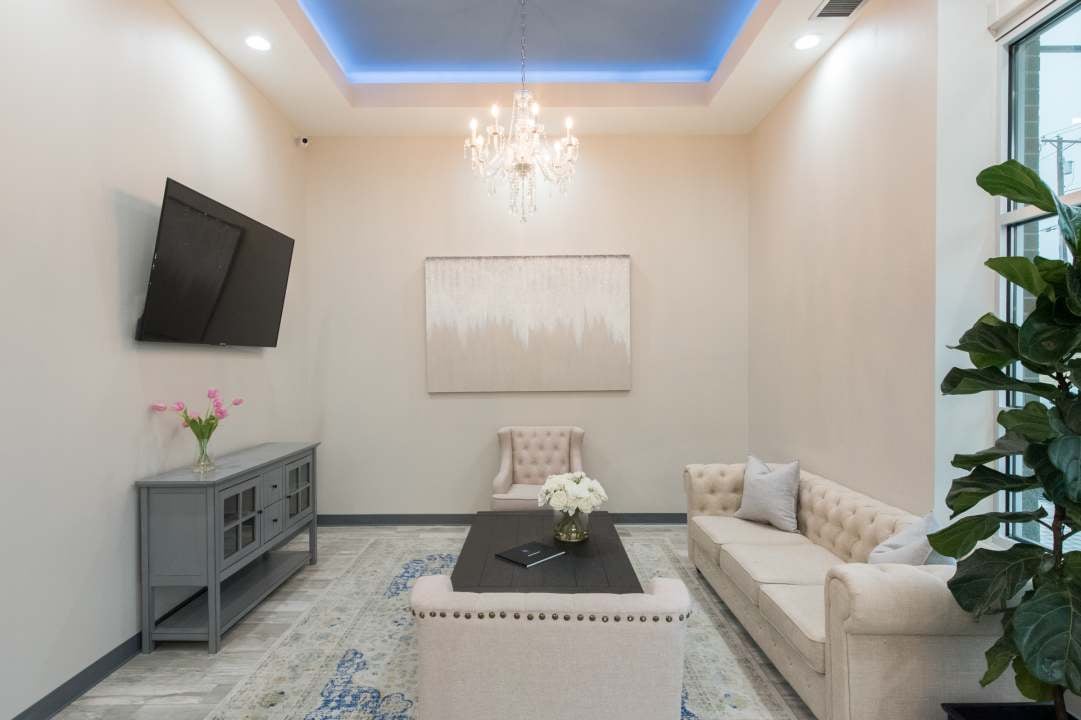
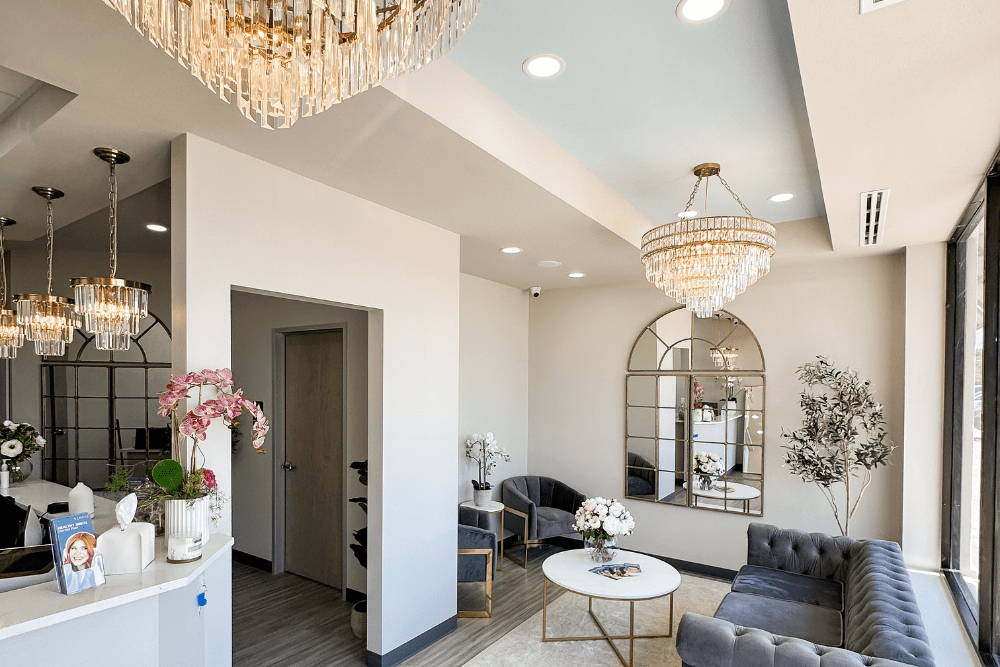
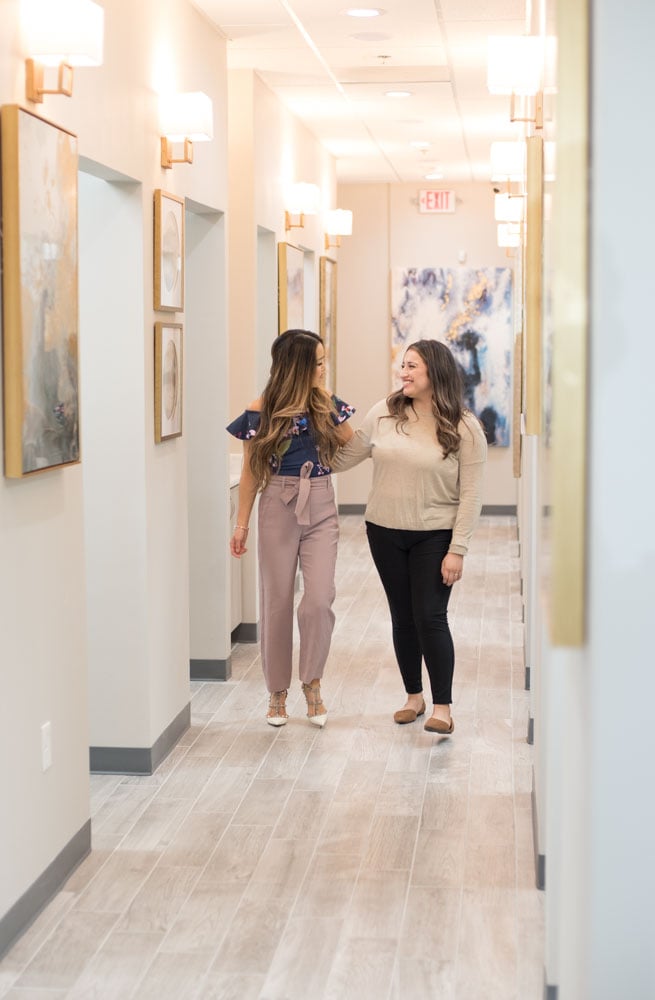
Our Dallas waiting area features stunning chandeliers, complimentary coffee, tea, and water, and comfortable seating. For family members waiting during your preparation appointment, it’s a genuinely welcoming space.

Traditional dental bridge — the most common type. A pontic suspended between two crowns cemented to the adjacent natural teeth on either side of the gap. Appropriate when healthy teeth are present on both sides. This is what most patients picture when they think of a dental bridge and what we place most frequently at our Dallas office.
Cantilever bridge — when a natural tooth exists on only one side of the gap. Anchors to a single abutment tooth. Appropriate in lower-stress areas of the mouth when the anchor tooth is particularly healthy and strong.
Maryland bridge — attaches to the back surfaces of adjacent teeth using bonded wings — without requiring full crown preparation. The most conservative option in terms of preserving adjacent tooth structure. Limited in where it can be used. Appropriate for certain front-tooth replacements when adjacent teeth are healthy and bite forces are manageable.
Our Dallas dental team gives you an honest recommendation at your consultation based on your specific gap, adjacent tooth health, and bone support — the factors that determine which type will serve you best long-term.
Your dentist examines the gap, reviews digital X-rays displayed on your treatment room TV, assesses the adjacent abutment teeth and bone support, and walks you through your options. Complete cost and timeline information is provided before any treatment is scheduled. If significant bone loss has already occurred, your dentist discusses how that affects your options honestly.
The abutment teeth are shaped to create space for the crowns that will anchor the bridge. Local anesthetic numbs the area completely — you feel pressure but no pain. Nitrous oxide is available for additional comfort support. Netflix on both TVs throughout. The Medit scanner captures the preparation in minutes — no impressions. Before you leave, your same-day temporary bridge is fabricated and placed. Warm towel. You walk out with a functional, natural-looking restoration already in place.
Avoid sticky or very chewy foods during the fabrication period. Floss carefully around the temporary — but do floss, because gum health during this period affects the permanent fit. If the temporary comes loose, call us promptly.
When your permanent bridge arrives from the lab — typically one to two weeks — you return for the final appointment, usually 30–45 minutes. Your dentist removes the temporary, checks fit, bite, and color, adjusts as needed, and cements the permanent bridge. You leave with a fully functional, long-lasting restoration.
Flossing under the bridge is the most important maintenance step — and the most commonly skipped. A floss threader, orthodontic flosser, or water flosser makes it simple. Skipping this area allows bacteria and food debris to accumulate beneath the pontic, leading to decay on the abutment teeth and gum disease beneath the bridge — both of which compromise longevity significantly.
Beyond that: brush twice daily with an electric toothbrush for the most effective cleaning around the bridge margins, maintain your regular dental cleanings every six months, and have your dentist check bridge integrity at every routine exam. With proper care and premium materials, a well-made bridge can last 15 years or longer.
A bridge is fixed — cemented permanently, functioning like natural teeth. More comfortable, more stable when chewing, and preferred by most patients who are candidates. Requires preparing the adjacent anchor teeth.
A partial denture is removable — comes in and out. Less expensive upfront, doesn’t require preparing adjacent teeth, and practical when adjacent teeth aren’t strong enough for a bridge or when multiple teeth in different areas are missing.
Our Dallas dental team gives you an honest recommendation at your consultation based on your specific situation — the health of your remaining teeth and bone, how many teeth are missing, and your goals and budget. We present both options clearly with complete cost information before you decide.

Most dental insurance plans that include major restorative coverage contribute toward dental bridge treatment — typically 50–70% after the annual deductible, subject to the plan’s annual maximum. Our team verifies your specific benefits before your consultation so you know your estimated out-of-pocket before committing.
We accept 18+ PPO dental insurance plans at our Dallas location. FSA and HSA payment is accepted. Cherry financing provides flexible monthly payment plans with quick approval for patients who need to spread the cost over time. Our Healthy Smiles Discount Plan at $89/year provides discounted rates on bridge treatment and all other services — $49/year for each additional family member. Visit our insurance page for the full carrier list.
Our Dallas office is at 17977 Preston Rd Unit A — on the corner of Frankford and Preston Road, convenient for patients throughout north Dallas. We serve patients from Preston Highlands, Preston Road, Lake Highlands, Uptown, and Oak Lawn.
Nearest pharmacy: directions here.
Get directions · Book your consultation · (214) 306-8088
Hours: Monday–Thursday 10am–6pm · Friday 10am–5pm
No — we place a same-day temporary bridge before you leave your preparation appointment. Your teeth are protected and your bite and appearance are maintained while the permanent bridge is fabricated at our partner lab, typically one to two weeks.
Yes — our Dallas office uses the Medit intraoral scanner for all bridge procedures. No trays, no putty, no gagging. The scan is more accurate than any physical impression and takes only a few minutes.
Emax lithium disilicate is used for front teeth — exceptional natural-looking aesthetics. Zirconia is used for back teeth — handles high bite forces without fracture risk. Our Dallas team selects the appropriate material based on the location of the gap and your specific bite forces.
With proper care — regular cleanings, daily flossing under the bridge, and consistent exams — a high-quality Emax or Zirconia bridge can last 15 years or longer. The main threats to longevity are decay on abutment teeth and gum disease beneath the pontic — both preventable with routine home care and professional cleanings.
The preparation appointment is performed under local anesthetic — you feel pressure but not pain. Nitrous oxide is available for additional comfort. Some sensitivity around the prepared teeth while wearing the temporary is normal and resolves when the permanent bridge is placed.
Yes — FSA and HSA payment is accepted at our Dallas location. Cherry financing is also available for patients who need flexible monthly payment options.
Yes — the nearest pharmacy is just minutes from our Frankford and Preston Road office.
A missing tooth deserves a permanent solution that looks exactly like what it replaced — and at our Dallas office, you walk out of your preparation appointment with a temporary bridge already in place from day one.
Book your dental bridge consultation at Thrive Dental & Orthodontics Dallas — corner of Frankford and Preston Road. Or call (214) 306-8088.
Conveniently located throughout the Dallas area to serve you better
Book your appointment today and experience the difference of premium dental care at an affordable price.