
Home › Dental and Orthodontic Services › General Dentistry › Dental Cleaning

A professional dental cleaning is the single most important thing you can do for your long-term oral health — more impactful, dollar for dollar, than almost any other dental treatment. It removes what brushing and flossing can’t, catches problems before they become expensive, and keeps your teeth and gums in the kind of shape that protects your health for life.
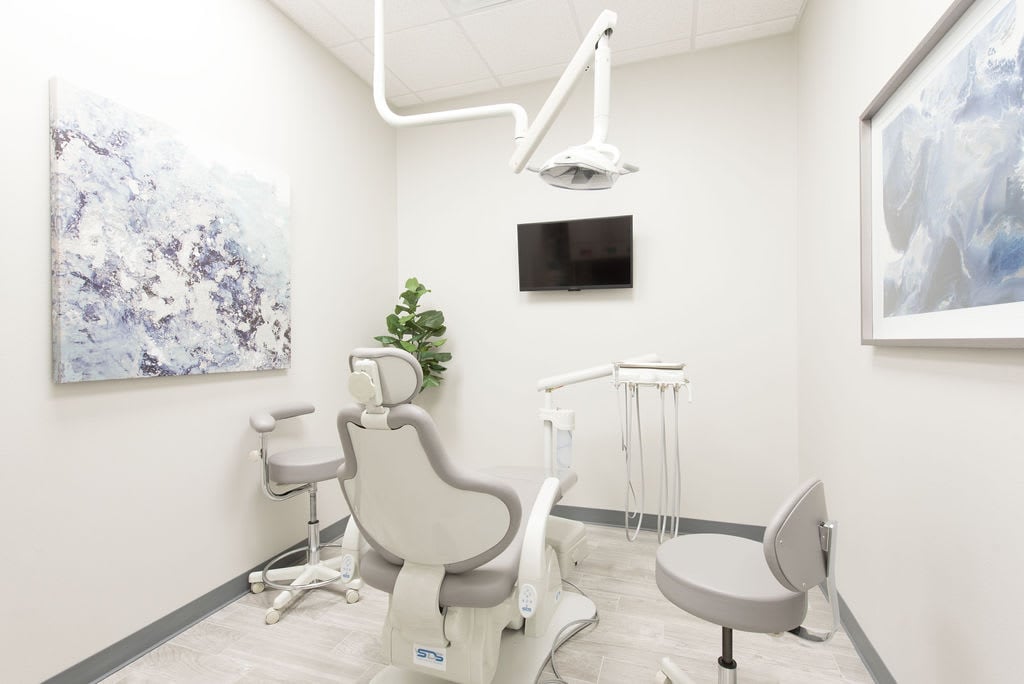
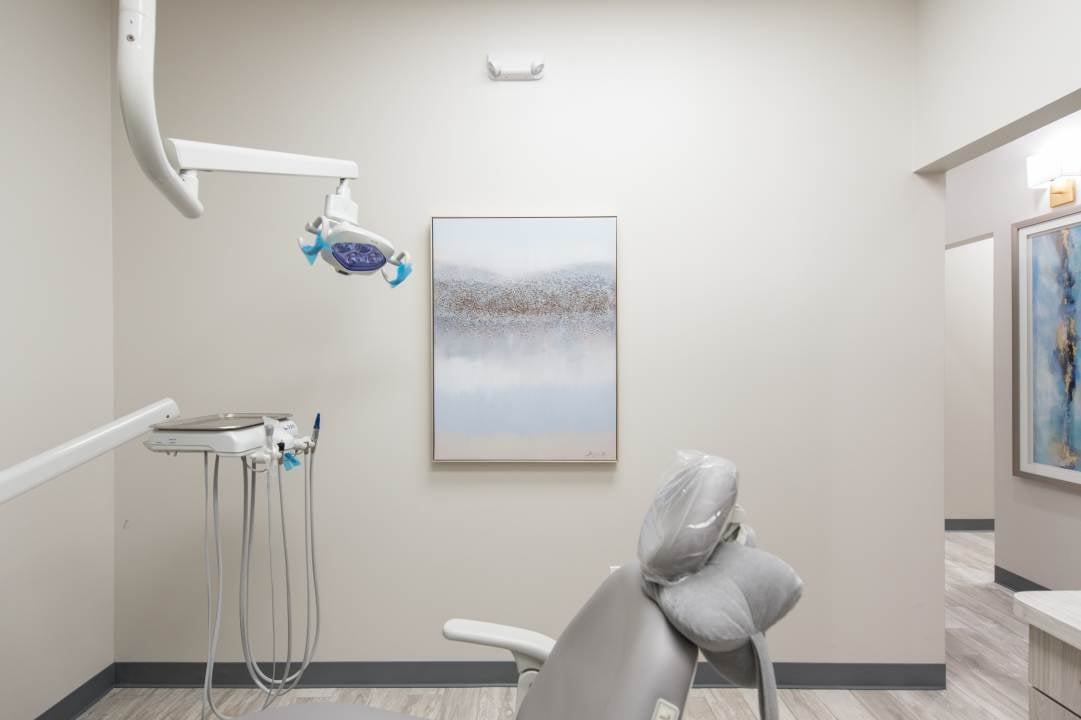
At Thrive Dental & Orthodontics, we provide professional dental cleanings for patients of all ages across six Dallas-area locations. Our hygiene team is thorough, gentle, and genuinely invested in making your visit as comfortable as possible. We offer warm lavender eye towels, comfort pillows and blankets, and headphones so you can relax — because we know coming to the dentist isn’t everyone’s favorite part of the week.
Book your cleaning at the Thrive location nearest you.
No matter how well you brush and floss at home, plaque finds places to hide — along the gumline, between teeth, and in the pits and grooves of molars — where it calcifies into tartar within 24–72 hours. Once tartar forms, it cannot be removed by brushing. Only a professional cleaning with specialized instruments can remove it.
Tartar left in place becomes the primary driver of gum disease — the leading cause of tooth loss in adults. It also provides a reservoir for the bacteria that cause cavities. Removing it twice a year breaks that cycle before it can cause lasting damage.
Beyond tartar removal, professional cleanings are one of the most cost-effective investments you can make in your dental health. A cavity caught at a routine cleaning is a simple filling. Left undetected for another year it may become a crown. Left longer it may become a root canal — or an extraction followed by an implant. The math strongly favors showing up twice a year.
Professional cleanings also polish away surface stains from coffee, tea, and wine, leaving your teeth noticeably brighter. If you’re interested in going further, ask about our complimentary custom whitening trays — available to all new Thrive patients.
Here’s exactly what to expect at your cleaning appointment:
Your hygienist begins with a visual exam of your teeth and gums, checking for signs of inflammation, recession, decay, or anything that needs the dentist’s attention. If it’s your first visit or it’s been a while, we’ll take digital X-rays to get a complete picture of what’s happening below the gumline and between teeth — areas no visual exam can fully assess.
Using a scaler, your hygienist carefully removes plaque and calcified tartar from every tooth surface — including along and just below the gumline. If there’s significant buildup in a specific area, they’ll spend extra time there. This is the most important step and the one no home routine can replicate.
A high-powered electric brush with a gritty polishing paste smooths the tooth surface, removing residual stains and plaque. The result is noticeably smoother, cleaner teeth that are also slightly harder for new plaque to adhere to.
Your hygienist flosses between every tooth, reaching areas your at-home flossing may miss. This also lets them check the tightness of contacts between teeth and flag anything that warrants attention.
A concentrated fluoride treatment is applied to your teeth — either as a varnish, foam, or gel — providing months of cavity protection by strengthening enamel at the microscopic level. The treatment takes just a minute and is one of the most effective preventive tools we have.
Your dentist reviews the hygienist’s findings, conducts their own assessment of your teeth and bite, performs an oral cancer screening, and discusses any concerns with you. If treatment is recommended, they’ll walk you through exactly what’s needed and why — no pressure, just information.
The whole appointment typically takes 45–60 minutes and most patients leave feeling notably fresher and cleaner than when they walked in.
Not every patient needs the same type of cleaning. Our hygiene team assesses your gum health at every visit and recommends the appropriate cleaning based on what you actually need.
A standard preventive cleaning for patients with healthy gums and good oral hygiene. This is the twice-yearly cleaning most people are familiar with. It removes surface plaque and tartar, polishes teeth, and includes a fluoride application. Appropriate for adults and children with no active gum disease.
When gum disease has progressed beyond what a standard cleaning can address, a deep dental cleaning — also called scaling and root planing — is required. This extends below the gumline to remove tartar and bacterial deposits from the tooth roots themselves, allowing inflamed gum tissue to heal and reattach properly.
Deep cleanings typically require local anesthetic, are done in quadrants (one section of the mouth at a time), and are followed by a healing period before a standard cleaning resumes. If you’ve been told you have periodontal disease, this type of cleaning is likely indicated.
Patients who have previously been treated for gum disease require more frequent professional cleanings — typically every three to four months rather than every six. Periodontal maintenance cleanings are more thorough than standard cleanings and focus on the areas where disease was previously active to prevent recurrence.
The American Dental Association recommends professional cleanings every six months for most patients. However, certain factors warrant more frequent visits:
Talk to your dentist at your next visit about the right frequency for your individual situation.
Starting professional cleanings early is one of the most important things you can do for your child’s long-term dental health. We recommend children’s dental cleanings beginning at the first birthday or within six months of the first tooth erupting.
Cavity risk is highest in the first decade of life. According to the CDC, more than half of children between ages 6 and 8 have had cavities in their baby teeth, and that number climbs to 57% among children 12–19 for permanent teeth. Regular cleanings catch early decay before it spreads, and dental sealants applied at cleaning visits provide lasting protection on the molars most vulnerable to decay.
Our team is experienced working with children of all ages and temperaments — including anxious kids. We work at every child’s pace and make sure each visit ends on a positive note.
Most patients think of a cleaning as purely cosmetic maintenance. It’s much more than that. At every visit, your hygienist and dentist are also screening for:
This comprehensive assessment is why your dental checkup and cleaning together are such a powerful health visit — they’re screening for far more than most patients realize.
A routine cleaning and exam typically takes 45–60 minutes for adults. Children’s appointments are usually a bit shorter. If it’s been a while since your last visit or you have significant buildup, allow a little extra time
For most patients with healthy gums, a cleaning is completely comfortable. Patients with sensitive gums or significant tartar buildup may feel some pressure or sensitivity during scaling — particularly around the gumline. If you’re anxious or have sensitivity, let us know before we start and we can take extra precautions. Topical numbing gel is available.
The cost of a routine cleaning varies depending on your insurance coverage and the type of cleaning needed. Most dental insurance plans cover two cleanings per year at 100%. For patients without insurance, we offer a dental discount plan that significantly reduces the cost of cleanings and other preventive services. Visit our insurance page for details.
A routine prophylaxis cleaning removes plaque and tartar from above and just below the gumline in healthy patients. A deep cleaning goes significantly further below the gumline to treat active gum disease — it requires anesthetic and is a more involved procedure. Your hygienist will recommend the appropriate type based on your gum measurements.
Signs that you may need a deep cleaning include bleeding gums during brushing or flossing, persistent bad breath, gums that appear red or swollen, teeth that look longer than they used to (gum recession), or loose teeth. Your hygienist will measure gum pocket depths at your visit — pockets deeper than 3mm typically indicate the need for a deep cleaning. A full assessment at your appointment is the only way to know for certain.
Yes — there’s no need to fast before a routine cleaning. We do ask that you brush your teeth before your appointment out of consideration for your hygienist. Avoid a heavy meal right beforehand if you’re prone to gagging.
Your teeth may feel sensitive for a few hours after cleaning, particularly if there was significant tartar buildup. Wait 30 minutes before eating or drinking if you received a fluoride treatment. Avoid staining foods and drinks (coffee, tea, wine) for a few hours to let the fluoride varnish set fully. Then maintain your results with twice-daily brushing using a quality electric toothbrush and daily flossing.
Your twice-yearly cleaning is the foundation everything else in your dental health is built on. Don’t skip it.
Book your cleaning at any of our six Dallas-area locations — Allen, Frisco, Sachse, Richardson, North Dallas, or Dallas.

Consistent dental cleanings help preserve the strength of your teeth, prevent bone loss, and reduce the risk of serious infections. It’s one of the most reliable ways to keep your smile healthy and your treatment needs minimal over time.

Conveniently located throughout the Dallas area to serve you better