
If you’ve been told you need a root canal — or you’re in tooth pain right now and suspect you might — the most important thing to know is this: a root canal relieves pain, it doesn’t cause it.
At Thrive Dental & Orthodontics in Sachse, we perform the majority of root canals in-house, without sending you to a specialist. That matters for two reasons: it saves you significant money, and it saves you time. When a root canal can be handled by your own dental team in a familiar office — with Netflix on the ceiling, the Walmart pharmacy directly across the street for prescription pickup, and a team that takes the time to make sure you’re comfortable — the experience is genuinely different from what most people expect.
We’re on the corner of Highway 78 and Woodbridge Parkway, across from Walmart. Get directions. Call us at (469) 649-1101 or book online.
Most general dental offices refer root canals to an endodontist — a specialist whose training focuses exclusively on root canal procedures. An endodontist charges specialist rates. Depending on the tooth and the case complexity, an endodontist root canal can cost two to three times what the same procedure costs when performed by an experienced general dentist in-house.
At Thrive Sachse, our dental team performs root canals in-house for the vast majority of cases. We have the training, the technology, and the clinical experience to handle most root canals without a referral. Keeping your treatment under one roof means:
We are transparent about the cases we refer. Extremely complex anatomy — particularly severely calcified canals, which occur when the canal space mineralizes and becomes very narrow or fully blocked — falls outside what we handle in-house. When a case genuinely needs a specialist, we say so and refer to trusted endodontists in the area. But those cases are a small minority. Most root canals we see are ones we can do well, at significantly lower cost, right here in Sachse.

Inside every tooth, beneath the hard outer enamel and dentin, is a soft core called the pulp. The pulp contains nerves, blood vessels, and connective tissue. When bacteria enter the tooth — through a crack, deep decay, or injury — they reach the pulp and cause infection. Once the pulp is infected, it cannot heal on its own. The infection progresses, causing pain, swelling, and eventually a dental abscess.
A root canal removes the infected pulp, cleans and shapes the canal space, seals it against future infection, and preserves the natural tooth. The tooth remains functional and can last decades with proper care — in many cases, for the rest of your life. According to the American Association of Endodontists, more than 15 million root canals are performed each year in the US. It is one of the most routine dental procedures performed — and one of the most misunderstood.
The alternative to a root canal is usually extraction. And while extracting the tooth eliminates the infection, it creates a new problem — a missing tooth that needs to be replaced with a dental bridge or partial denture. Saving the natural tooth with a root canal is almost always the better long-term outcome, both clinically and financially.
Some root canals are discovered at routine dental checkups through X-rays — before significant symptoms develop. Others announce themselves. Common signs that pulp infection may be present include:
If you’re experiencing any of these — especially severe pain, swelling, or a fever alongside tooth pain — call us immediately. We prioritize dental emergencies and can often see you the same day. The faster we see a dental infection, the more options we have to save the tooth.
This is the question everyone wants answered — and the honest answer is no, not the procedure itself.
The pain most people associate with root canals is the pain of the infection before treatment. The procedure removes that pain. With modern local anesthetic, a root canal is clinically comparable in comfort to having a cavity filled. The tooth and surrounding area are fully numb before any instrumentation begins.
After the procedure, mild soreness around the treated area is normal for two to four days as the surrounding tissue heals. Over-the-counter pain medication manages this comfortably for most patients. For patients who need prescription pain relief or antibiotics for significant infection, we prescribe at the appointment — and the Walmart pharmacy directly across Woodbridge Parkway means you can fill your prescription within minutes of leaving our office.
If pain intensifies after the procedure rather than gradually improving, contact us — this can occasionally indicate a need for additional treatment, and we want to know about it promptly.
Your dentist takes detailed digital X-rays of the affected tooth to assess the canal anatomy, the extent of infection in the surrounding bone, and whether in-house treatment is appropriate for your case. Our digital X-ray technology produces clear, detailed images with significantly less radiation than traditional film X-rays — and we can review them with you immediately on screen.
Local anesthesia is administered to completely numb the tooth and surrounding tissue. The procedure begins only when you’re fully comfortable — you will feel pressure during treatment but should not feel pain. If at any point you feel discomfort, let us know and we can administer additional anesthetic.
For patients with significant dental anxiety, we offer sedation dentistry options. A root canal under sedation is a remarkably calm experience — many patients tell us afterward they barely remember the appointment.
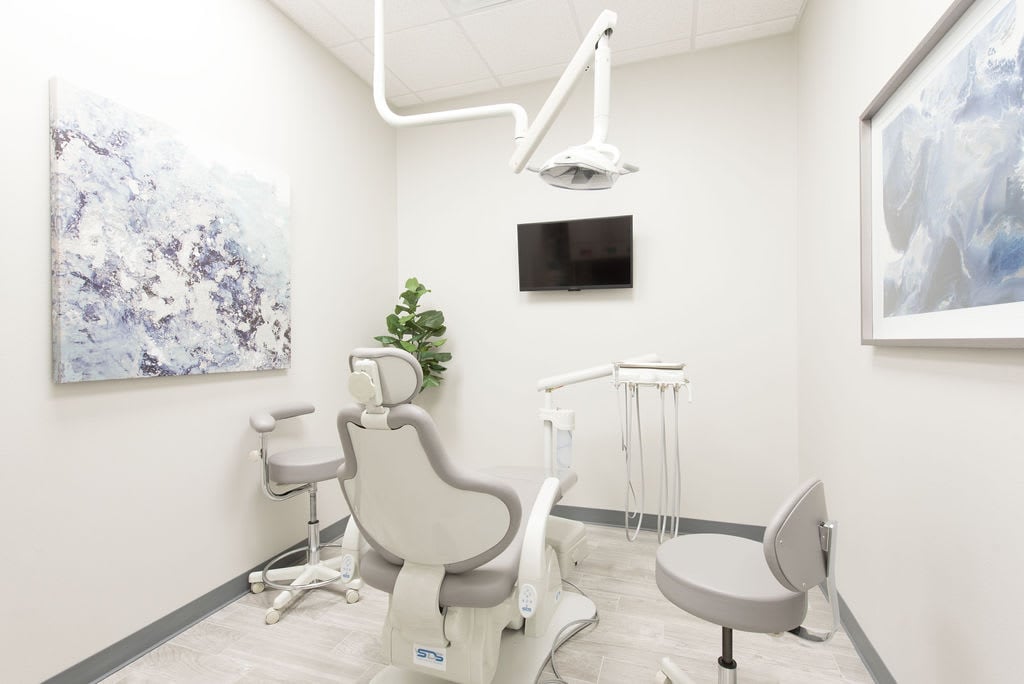
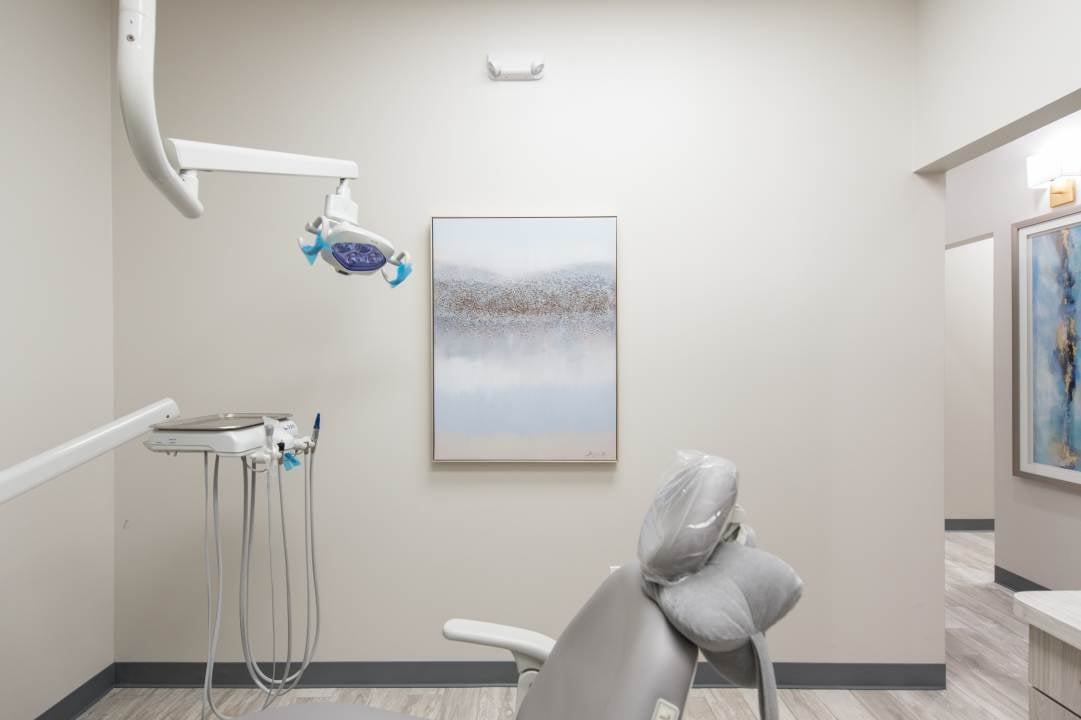
Every treatment room at our Sachse office has two TVs — one directly above you, one you can see from the chair — so you can watch Netflix during your appointment. Pick something you’ve been meaning to watch. The appointment is typically 60–90 minutes; that’s enough time for an episode or two and genuinely makes the experience feel different from what most people picture when they think of a root canal.
A small rubber dam is placed around the tooth to keep it clean, dry, and protected from saliva during the procedure. This also prevents any debris from the canal from entering the mouth.
A small opening is created in the top of the tooth to access the pulp chamber. Using very fine instruments, your dentist carefully removes the infected pulp, nerve tissue, and bacteria from the pulp chamber and each root canal. The canals are then shaped and irrigated with antimicrobial solution to eliminate remaining bacteria. This is the most time-intensive step and the one that directly determines the long-term success of the procedure.
Once the canals are thoroughly cleaned and shaped, they are filled with gutta-percha — a biocompatible rubber-like material — and sealed. A temporary or permanent filling closes the access opening.
In most cases, a dental crown is placed over the treated tooth to restore its strength and protect it from fracture — particularly important for back teeth that bear significant chewing forces. We use digital scanning at our Sachse office rather than goopy impressions for crown fabrication, and we partner with high-quality dental labs for the permanent restoration. The crown is typically placed at a follow-up appointment after the tooth has settled.

We believe in keeping root canals in-house whenever it’s clinically appropriate. Referral to a specialist means waiting longer, paying more, and managing care across two offices. We avoid it when we can genuinely handle the case well ourselves.
We do refer when a case genuinely exceeds what we should handle in-house. The most common reason is severely calcified canals — a condition where the canal space has mineralized and narrowed significantly over time, often in older teeth with a history of trauma or prior restorations. Navigating calcified canals requires specialized magnification, ultrasonic equipment, and expertise that makes endodontist referral the right call for patient safety and treatment success.
When we refer, we do so to trusted endodontists in the Sachse and Wylie area and coordinate your care so the transition is as smooth as possible. You’ll always know why we’re referring, what the specialist will do, and what to expect cost-wise before you leave our office.
The bottom line: if we can do it well in-house, we will — because it saves you money and keeps your care in one place. If a specialist is genuinely the right answer for your specific tooth, we’ll tell you that honestly.
The first 24–48 hours: Mild to moderate soreness is normal. The area around the tooth may be tender when you bite down. Take over-the-counter pain medication as directed — ibuprofen is generally more effective for dental pain than acetaminophen because it addresses both pain and inflammation. Eat soft foods and avoid chewing on the treated side until the permanent crown is placed.
While wearing the temporary filling: Be careful with sticky or hard foods — they can dislodge a temporary filling. If the temporary comes out, call us promptly. Don’t leave the tooth unprotected for more than a day or two.
Getting the crown: The permanent crown is typically placed at a follow-up appointment one to two weeks after the root canal. Getting the crown promptly is important — root canal-treated teeth become more brittle without the pulp and are significantly more prone to fracture without crown protection. Patients who delay crown placement risk fracturing the tooth and losing it entirely, which defeats the purpose of the root canal.
Long-term care: Brush, floss, and maintain your regular dental cleanings. A root canal-treated tooth with a crown, maintained with good home care and twice-yearly cleanings, can last 20 years or longer.

Root canal cost depends on which tooth is being treated and the complexity of the case. Front teeth with fewer canals are generally less expensive than molars with three or four canals. The crown, which is recommended in most cases following a root canal, is an additional cost.
By performing root canals in-house rather than referring to a specialist, we keep costs significantly lower than what you’d pay at an endodontist’s office — in many cases two to three times less for the same procedure.
Most dental insurance plans that include major restorative coverage contribute toward root canal treatment. Our team verifies your benefits before treatment so you know your estimated out-of-pocket before we begin. For patients without insurance, our Healthy Smiles Discount Plan at $89/year provides meaningful savings on root canals, crowns, and all other services. Visit our insurance page for the full carrier list.
In-house payment plans are available for patients who need help spreading the cost of treatment.
A filling addresses decay that hasn’t reached the pulp. A root canal is needed when decay, a crack, or an injury has allowed bacteria to infect the pulp tissue inside the tooth. Signs of pulp infection include severe or spontaneous pain, prolonged sensitivity to hot or cold, swelling, and tooth discoloration. Your dentist uses X-rays and clinical tests to determine which is indicated — you can’t reliably tell from symptoms alone. If you’re unsure, call us and we’ll assess it.
Yes, if you only had local anesthesia. The numbness typically wears off within a few hours. If you opted for sedation, you’ll need someone to drive you home and should plan to rest for the remainder of the day.
Most root canals are completed in one appointment of 60–90 minutes. More complex cases — teeth with additional canals or curved roots — may require two appointments. The crown placement is a separate appointment, typically scheduled one to two weeks later.
In almost all cases, saving the natural tooth with a root canal is the better long-term outcome. Your natural teeth maintain jaw bone density, support neighboring teeth, and function more effectively than replacements. Extracting the tooth creates a gap that needs to be filled with a dental bridge or partial denture — both of which cost money and involve more treatment. We always recommend saving the tooth when it’s clinically viable.
The infection progresses. A toothache that comes and goes is not resolving — it’s often a sign that the nerve has died while the infection continues to spread into the bone. An untreated dental infection can lead to abscess, spread to surrounding teeth and jaw bone, and in serious cases become a systemic medical emergency. Beyond the health risk, delaying treatment almost always results in more expensive and more complex treatment later. Call us if you’re in pain.
When pain medication or antibiotics are clinically indicated after your root canal, our dentists prescribe them at your appointment. The Walmart Supercenter directly across Woodbridge Parkway has a full-service pharmacy — for most patients, your prescription is filled within minutes of leaving our office.
Root canal retreatment — redoing a previous root canal — is possible in many cases. Signs of a failing root canal include return of pain, new swelling, or a new abscess near a previously treated tooth. Come in for an evaluation and X-rays and we’ll assess whether retreatment is appropriate or whether specialist referral is needed for your specific case.
Tooth pain is your body asking for help. The sooner we see you, the more we can do to save the tooth and get you comfortable.
Book your appointment at Thrive Dental & Orthodontics Sachse — corner of Highway 78 and Woodbridge Parkway, directly across from Walmart. Or call (469) 649-1101 right now if you’re in pain.
Conveniently located throughout the Dallas area to serve you better
Book your appointment today and experience the difference of premium dental care at an affordable price.