
Home › Dental and Orthodontic Services › Cosmetic Dentist › Dental Veneers

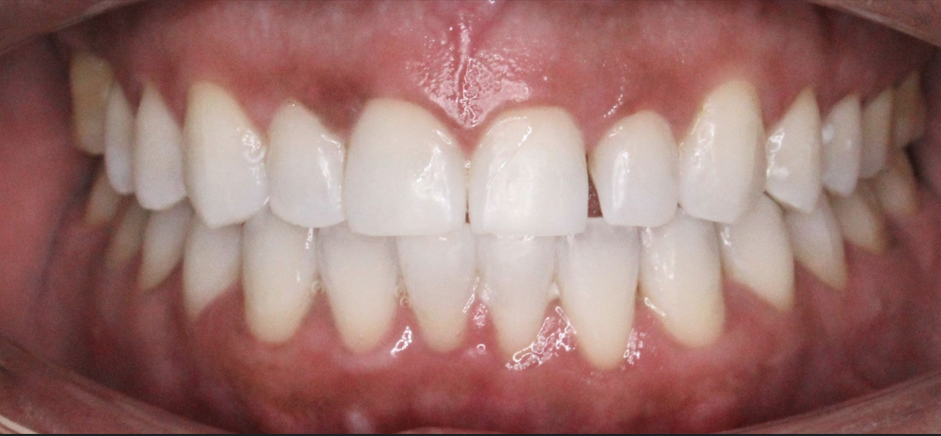
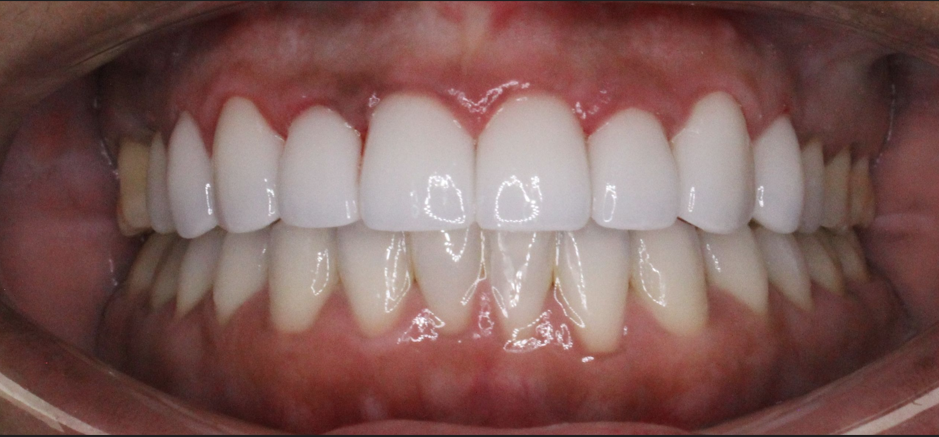
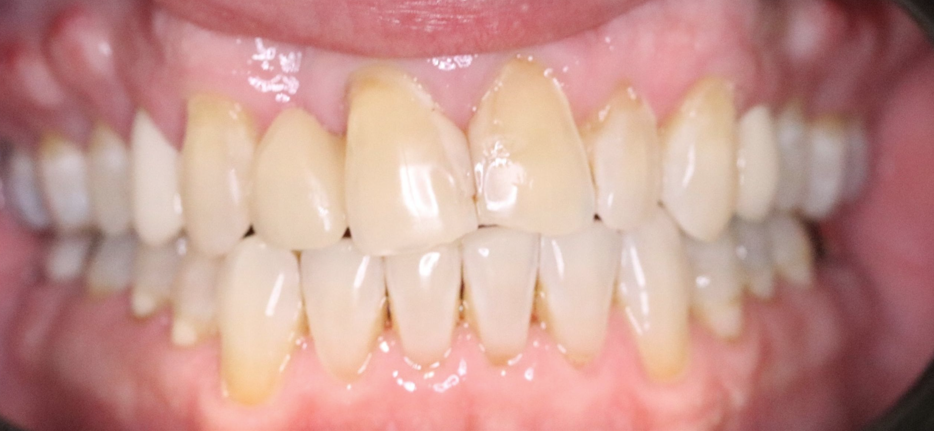
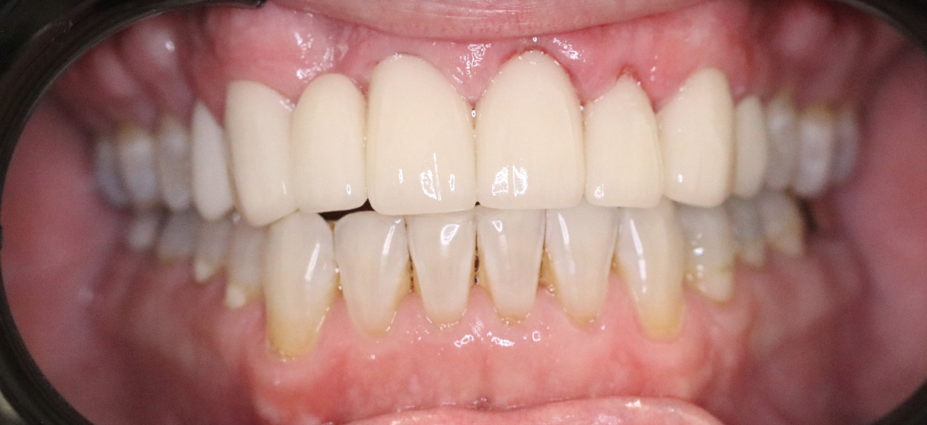
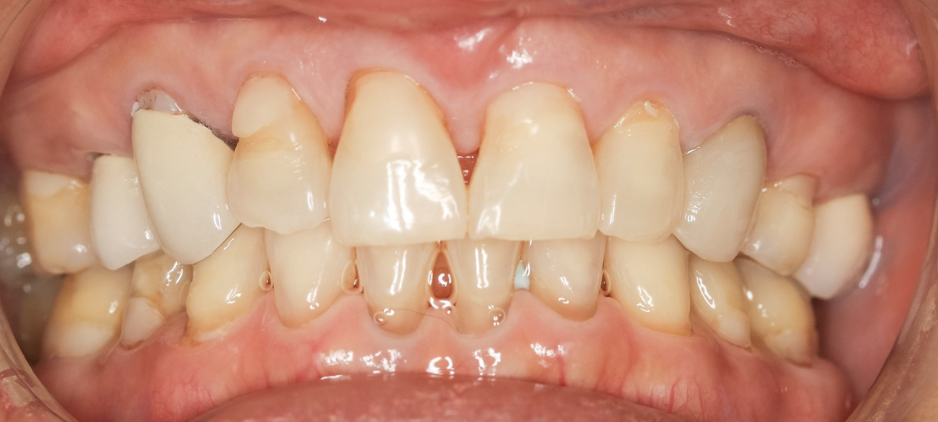
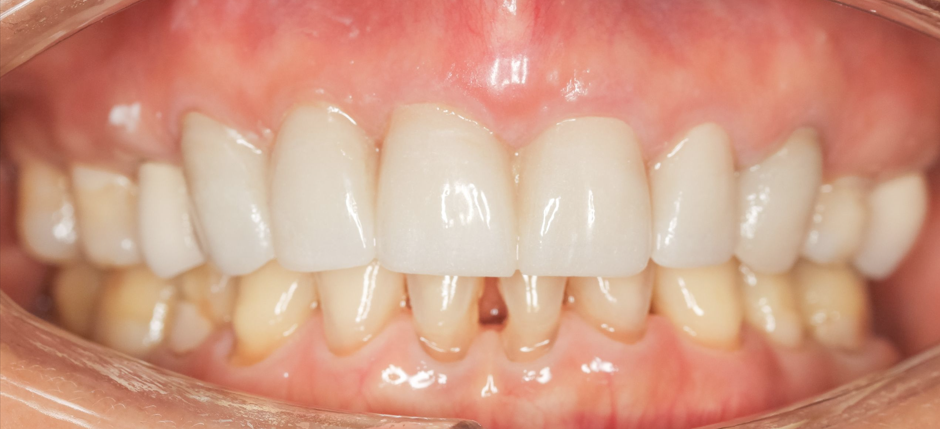
Veneers are one of the most transformative treatments in cosmetic dentistry. In as little as two appointments, they can address chips, cracks, deep staining, gaps, minor misalignment, and uneven proportions — creating a smile that looks completely natural and lasts for years.
At Thrive Dental & Orthodontics, our cosmetic dental team offers both porcelain veneers and resin composite veneers across all six of our Dallas-area locations. We’ll help you understand which option is right for your goals, your timeline, and your budget — and give you a clear picture of what results to realistically expect.
Book a consultation at the Thrive location nearest you.
Dental veneers are thin shells — typically 0.5 to 1 millimeter thick — custom-fabricated to fit precisely over the front surface of a tooth. They’re bonded permanently to the enamel and, once placed, are indistinguishable from natural teeth in both appearance and feel.
Veneers address the cosmetic surface of a tooth rather than its underlying structure. That’s what distinguishes them from dental crowns, which cap the entire tooth and are used when significant structural restoration is needed. For cosmetic concerns on otherwise healthy teeth, veneers are the more conservative option — they preserve more natural tooth structure while delivering dramatic aesthetic improvements.
Porcelain veneers are the gold standard in cosmetic dentistry. Custom-fabricated in a dental lab from high-strength ceramic, they offer the most lifelike appearance of any veneer material — mimicking the translucency and light-reflecting properties of natural tooth enamel in a way that composite simply cannot match.
Porcelain is also highly stain-resistant, meaning porcelain veneers maintain their color and brightness over time even with regular coffee, tea, and wine consumption. They are the most durable option, with research showing survival rates of 15–20 years or longer with proper care.
The tradeoff is process and cost. Porcelain veneers require at least two appointments — one to prepare the teeth and take impressions, and one to bond the final veneers — with a temporary set worn in between while the lab fabricates your permanent restorations. A small amount of enamel is also removed during preparation to create space for the veneer, which means the process is permanent and irreversible.
Porcelain veneers are the right choice for patients who want the most natural-looking, longest-lasting result and are investing in a comprehensive smile transformation.
Resin composite veneers are made from the same tooth-colored composite resin used in modern tooth bonding and fillings. They can often be completed in a single appointment, as the material is applied directly to the tooth surface and sculpted by your dentist rather than fabricated in a lab.
Composite veneers are more affordable than porcelain and require less enamel removal — in many cases, none at all. They’re an excellent option for patients looking to address minor cosmetic concerns, those who want to preview a smile change before committing to porcelain, or younger patients whose smiles may still be evolving.
The tradeoffs are longevity and stain resistance. Composite veneers typically last 5–7 years before needing replacement or touch-up, and they’re more susceptible to staining over time than porcelain. They may also lack the depth and translucency that makes porcelain so remarkably lifelike.
Minimal prep veneers are ultra-thin porcelain veneers — typically around 0.2 millimeters — that can be placed with minimal or no enamel removal. They’re marketed as a “no-prep” or “minimal-prep” veneer option.
In the right case — patients with naturally smaller teeth or specific spacing concerns — no prep veneers can be appropriate. However, their thinness limits how effectively they can mask dark staining or dramatically alter tooth shape. For most full smile transformations, traditional porcelain veneers deliver a superior result. Our team will give you an honest assessment of whether no prep veneers are genuinely the right fit for your situation.
Veneers are a highly effective cosmetic solution for the right patient. The ideal candidate has:
Veneers are not recommended for children or younger teens whose teeth are still developing, or for patients who haven’t addressed underlying alignment concerns that affect bite function.
If alignment is a significant issue, our team may recommend Invisalign or braces before veneers — straightening the teeth first means fewer veneers are needed and the cosmetic result is more natural and stable long-term. Many of our smile transformation patients complete orthodontic treatment and then move on to veneers for a comprehensive result.
Your first appointment is a thorough consultation. Our cosmetic dental team evaluates your teeth, discusses your goals in detail, and walks you through which veneer type best suits your situation. We use digital imaging to help you visualize the potential result before any treatment begins.
This is also when we assess your overall oral health. If there’s any decay, gum inflammation, or other issues that need to be addressed first, we’ll build that into the treatment plan. Veneers placed over unhealthy teeth won’t last — and we won’t cut corners on that foundation.
For porcelain veneers, a thin layer of enamel — typically between 0.5 and 0.7 millimeters — is removed from the front surface of each tooth being treated. This creates space for the veneer and ensures the final result looks proportional rather than bulky. Local anesthetic is used so you feel no discomfort.
Impressions or a digital scan of the prepared teeth are sent to our dental lab. Temporary veneers are placed to protect the teeth and let you preview the shape and size while your permanent veneers are being fabricated — typically one to two weeks.
When your permanent veneers arrive, each one is carefully tried in before bonding to confirm the fit, color, and appearance. Minor adjustments can be made at this stage. Once approved, the tooth surface is etched, a bonding agent is applied, and each veneer is cemented permanently in place and cured with a specialized light.
The final result is checked for fit and bite, and any minor adjustments are made. Most patients leave this appointment ready to show off their new smile.
A follow-up visit a few weeks after placement lets us assess how the veneers are settling and address any questions. Beyond that, care is straightforward — brush, floss, and attend your regular dental cleanings as normal.
With proper care, research shows porcelain veneers can last 15–20 years or longer. Composite veneers typically last 5–7 years before needing replacement or refinishing.
Longevity depends significantly on how well you care for them:
Veneers cannot be whitened — their color is permanent. For this reason, if you’re planning to whiten your natural teeth, do so before veneers are placed so your dentist can match the veneer shade to your desired final tooth color.
Veneers are one of several cosmetic options — and the right choice depends on what you’re trying to correct.
Veneers vs. teeth whitening: Whitening addresses surface and intrinsic staining in natural teeth but cannot change tooth shape, fix chips, or address tetracycline staining. If whitening will achieve your goal, it’s a far more conservative and affordable option. If the staining is too severe for whitening — or if you want to also change shape or proportions — veneers are the better choice.
Veneers vs. tooth bonding: Bonding uses composite resin applied directly to the tooth — the same material as composite veneers — and is ideal for small chips, minor gaps, or single-tooth repairs. It’s faster and less expensive than veneers but covers less surface area and isn’t as durable for comprehensive smile changes.
Veneers vs. dental crowns: Crowns cover the entire tooth and are used when the tooth is structurally compromised — significant decay, large fillings, fractures, or after a root canal. Veneers only cover the front surface and are appropriate when the tooth is structurally healthy but cosmetically imperfect.
Veneers vs. Invisalign: If the primary concern is crooked or misaligned teeth, orthodontic treatment is the more appropriate first step — it moves teeth into proper position rather than masking them. Many patients choose to complete Invisalign and then do a smaller number of veneers for final cosmetic refinement.
Veneer cost varies based on the type of veneer, the number of teeth being treated, and case complexity. Composite veneers are less expensive per tooth than porcelain, though they require replacement more frequently. Porcelain veneers are a higher upfront investment with a significantly longer lifespan.
Dental veneers are a cosmetic procedure and are not covered by dental insurance in most cases. At Thrive, we offer financing options to spread the cost of treatment — ask our team at your consultation about what’s available.
“Veneers price Dallas, TX” is one of the most searched terms for this topic, and we know cost transparency matters. Our team provides a complete cost breakdown at your consultation — no surprises.
The consultation and any initial assessments are completely comfortable. For porcelain veneers, the preparation appointment uses local anesthetic so the tooth reduction is painless. Some patients experience mild sensitivity after preparation while wearing temporaries — this resolves once the permanent veneers are bonded. Composite veneers typically require no anesthetic at all.
Porcelain veneers are a permanent commitment in the sense that enamel removed during preparation cannot be replaced. The veneers themselves will eventually need to be replaced — but the altered tooth will always require a veneer or other restoration covering it. Composite veneers involve minimal or no enamel removal and are considered a more reversible option.
Veneers can address mild crowding or overlap cosmetically, but they don’t move teeth — they change appearance only. For significant misalignment, braces or Invisalign are the appropriate treatment. Our team will give you an honest recommendation at your consultation.
This depends entirely on your goals and which teeth are visible when you smile. Some patients treat a single chipped tooth with one veneer. A full smile transformation typically involves 6–10 veneers covering the teeth visible in a natural smile. Our team will help you determine the right number based on your specific smile design goals.
Possibly — but bruxism must be addressed first or alongside veneer placement. Grinding can fracture veneers prematurely. A custom night guard worn while sleeping is typically recommended. Our team will assess your grinding severity and advise accordingly.
Yes — when done well, veneers are virtually indistinguishable from natural teeth. The shape, size, color, and translucency are all custom-designed for your face and smile. Patients are often surprised by how natural the result looks even to people who see them every day. Dr. Christine Coughlin summed it up well: “I’ve had patients tear up the moment they look in the mirror — they finally see the smile they’ve always wanted, and that confidence radiates into every part of their life.
Veneers are one of the most rewarding treatments we offer — and one of the most meaningful for our patients. If you’ve been thinking about transforming your smile, a consultation is the best first step. We’ll give you a clear, honest picture of what’s possible and what it would take to get there.
Book your veneer consultation at any of our six Dallas-area locations — Allen, Frisco, Sachse, Richardson, North Dallas, or Dallas.

Veneers can completely change how someone sees themselves. I’ve had patients tear up the moment they look in the mirror, they finally see the smile they’ve always wanted, and that confidence radiates into every part of their life.

Conveniently located throughout the Dallas area to serve you better