
Home › Dental and Orthodontic Services › Orthodontist › Invisalign Clear Aligners

Invisalign is one of the most significant advances in orthodontics of the past 25 years — and it’s now one of the most requested treatments we offer at Thrive Dental & Orthodontics. If you’ve been thinking about straightening your teeth without metal brackets and wires, this page covers everything you need to know.
Our orthodontic team treats Invisalign patients across all six of our Dallas-area locations. We offer free consultations, flexible payment plans, and we’ll give you an honest assessment of whether Invisalign is the right choice for your specific case — including when it isn’t.
Invisalign is a system of custom-made, removable clear plastic aligners that gradually shift your teeth into proper alignment. Instead of brackets bonded to your teeth and wires adjusted at appointments, Invisalign uses a series of trays — each worn for about one to two weeks — that apply gentle, controlled pressure to move teeth incrementally toward the final result.
The aligners are made from Invisalign’s patented SmartTrack material, a thermoplastic designed to fit precisely over your teeth and exert the right amount of force in the right direction. Each tray is slightly different from the last, and as you progress through the series, your teeth move closer to their final position.
At Thrive, we use a fast, precise 3D digital scan of your teeth — no goopy impressions — to map out your full treatment plan before you receive a single tray. We can even show you a digital preview of what your smile will look like when treatment is complete.
Invisalign has evolved significantly since its early years and can now address a much wider range of orthodontic issues than most people realize. Our orthodontic team uses Invisalign to treat:
For mild to moderate cases, Invisalign can achieve results comparable to traditional braces. For complex bite corrections — significant jaw discrepancies, severe crowding, or certain bite issues — traditional braces may give our orthodontic team more precise control over tooth movement. We’ll be straightforward about which approach is better for your case at your free consultation.
This is the most common question we get, and the honest answer depends on your specific teeth, lifestyle, and priorities.
Invisalign tends to be the better choice if:
Traditional braces may be the better choice if:
Neither option is universally better. Our orthodontic team will give you a clinical recommendation based on your actual teeth — not on which option costs more. For a detailed side-by-side comparison, see our guide on all about braces.
Your first appointment is a no-obligation consultation with our orthodontic team. We’ll review your teeth, take X-rays, and evaluate your bite. If Invisalign is a good fit, we’ll walk you through the treatment plan, estimated timeline, and total cost before you make any decisions. If braces or another option would serve you better, we’ll tell you that too.
Once you decide to move forward, we take a 3D digital scan of your teeth using our iTero intraoral scanner — no impressions needed. From this scan, your custom aligners are fabricated and a complete digital treatment plan is mapped out. You’ll be able to see a simulation of your smile progression from start to finish before your first tray arrives.
When your aligners are ready, you’ll come in to receive your first set and get fitted with any attachments needed. Attachments are small, tooth-colored dots of composite resin bonded to specific teeth — they help the aligner grip the tooth and apply force in precise directions. Not every patient needs them, but many do, especially for more complex movements.
Your orthodontic team will walk you through how to insert and remove the aligners, how to clean them, and what to expect as you begin treatment.
Aligners must be worn 20–22 hours per day to work as planned. You remove them to eat, drink anything other than water, brush, and floss. That’s it. Wear them consistently and your teeth will move on schedule. Slack off regularly and treatment stalls — or the next set of trays won’t fit correctly.
You’ll switch to a new set of trays approximately every one to two weeks. Most patients have check-in appointments every six to ten weeks so our team can monitor progress and make any needed adjustments.
After wearing your final aligner, your teeth may be very close to — but not quite at — the ideal position. Refinements are additional trays ordered at no extra charge to fine-tune the result. They’re common and expected in most cases. Your orthodontic team will assess at your final appointment whether refinements are needed.
After Invisalign treatment, retainers are essential. Teeth have a strong tendency to shift back toward their original positions — particularly in the first year after treatment — and only consistent retainer wear prevents this from happening.
Most patients transition to nighttime-only retainer wear after an initial full-time period. We recommend wearing retainers indefinitely to protect your investment long-term.
Invisalign isn’t just for adults. Invisalign Teen is a version of the system designed specifically for teenage patients, with a few key differences:
Compliance indicators are built into the aligners — small blue dots that fade with wear, giving parents and our team a way to monitor whether aligners are being worn consistently. Teen trays also include replacement aligners for lost or damaged trays, which is a practical reality for younger patients.
Invisalign Teen is a great option for motivated teenagers who want a discreet treatment experience. For teens who are less reliable about compliance, traditional braces may be the more reliable path to getting the result they want.
Adults make up a large and growing segment of Invisalign patients — and for good reason. The ability to straighten teeth discreetly, without the visibility of metal brackets, makes Invisalign especially appealing in professional environments.
Invisalign for adults at Thrive accommodates the realities of adult life: appointment scheduling flexibility, treatment plans that account for existing dental work like crowns or veneers, and options for combining Invisalign with cosmetic dentistry treatments to achieve a complete smile transformation.
Many adult patients combine Invisalign with professional teeth whitening after treatment for a comprehensive result. All new Thrive patients receive complimentary custom whitening trays — making this a natural next step at the end of your Invisalign journey.
Treatment time depends on the complexity of your case:
Mild spacing or crowding cases can be completed in as little as 6–12 months. Moderate cases — the most common — typically take 12–18 months. Complex cases may require 18–24 months or longer.
Compliance is the single biggest variable within your control. Patients who wear their aligners 20–22 hours per day consistently finish on schedule. Patients who regularly remove them for longer than meals tend to extend their treatment timeline significantly.
Your orthodontic team will give you a realistic estimate at your consultation based on the specific movements your teeth need to make.
The cost of Invisalign at Thrive depends on case complexity and treatment length — simple cases cost less than complex ones because they require fewer trays and fewer appointments.
Invisalign is generally priced slightly higher than traditional braces due to the lab fabrication costs of the custom aligners. However, the difference is often smaller than people expect, and many patients find the convenience and aesthetic benefits worth the premium.
We accept most major dental insurance plans that include orthodontic coverage, and we work to maximize your benefits before treatment begins. For patients without orthodontic insurance coverage, we offer flexible in-house payment plans that spread costs over the treatment period.
For a detailed look at what drives orthodontic treatment costs, see our post on why braces cost so much — the same factors apply to Invisalign. For insurance-specific questions, visit our dental insurance page or call any of our locations directly.
One of the biggest advantages of Invisalign over braces is how much easier oral hygiene is during treatment. But the aligners themselves do require proper care.
Rinse every time you remove them. When you take out your aligners to eat or drink, rinse them under lukewarm water before setting them down. This removes saliva and prevents bacterial buildup.
Clean them daily. Use a soft toothbrush and mild clear soap — not toothpaste, which is abrasive and can scratch the plastic, making the trays more visible. Rinse thoroughly. You can also use Invisalign’s cleaning crystals or a retainer cleaning tablet.
Never leave them out of their case. Lost aligners are one of the most common (and costly) Invisalign problems. When they’re not in your mouth, they go in the case — every time.
Don’t drink anything except water while wearing them. Coffee, tea, wine, juice, and other colored beverages will stain the clear plastic. Hot beverages can warp the tray.
Keep up your regular dental cleanings. Invisalign makes it easier to brush and floss properly, but don’t skip your biannual professional cleanings. Your hygienist can also check that teeth are tracking properly in the aligners and flag any concerns for our orthodontic team.
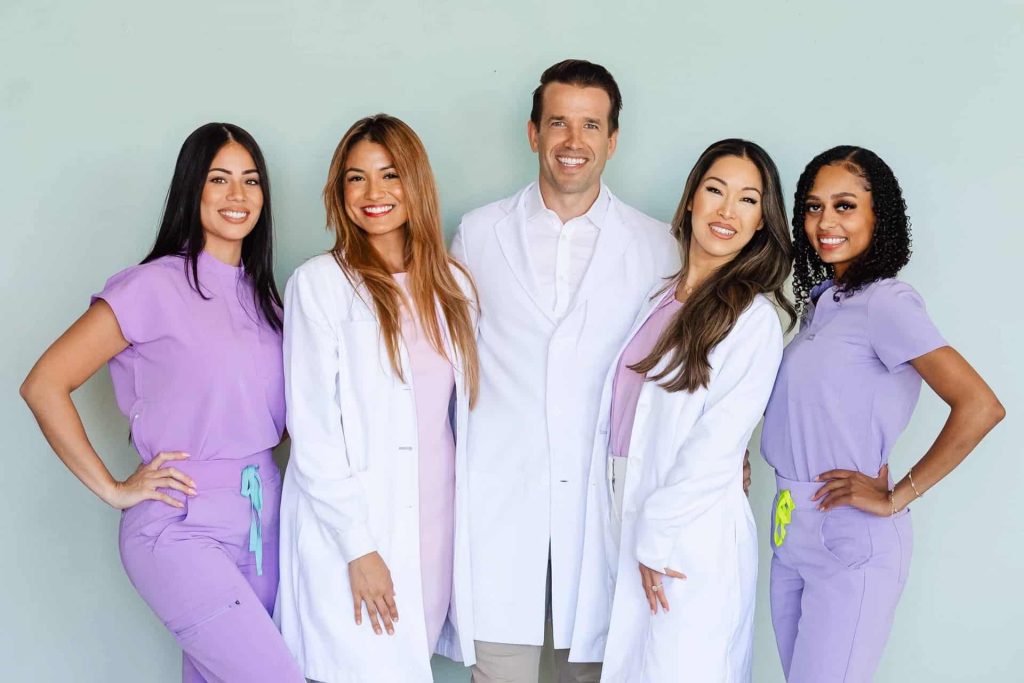
Our orthodontic team offers Invisalign consultations and treatment at all six Thrive locations across the Dallas-Fort Worth area:
All locations offer free Invisalign consultations with our orthodontic team, flexible scheduling, and the same standard of care across every office.
For mild to moderate cases — crowding, spacing, and many bite issues — Invisalign can achieve results comparable to traditional braces. For complex cases involving significant bite correction or severe crowding, braces typically give our orthodontic team more control over tooth movement. The best way to know which is right for you is a consultation with our team
Most patients experience some pressure and mild discomfort when switching to a new set of trays — this is the aligner engaging with teeth that haven’t yet moved to their new position. It’s typically mild and resolves within 1–2 days. Acetaminophen helps if needed. Invisalign is generally more comfortable than braces because there are no brackets to irritate soft tissue and no wire adjustments.
Yes — because you remove the aligners to eat, there are no food restrictions with Invisalign. This is one of the most popular benefits for adult patients. Just make sure you brush before putting aligners back in after meals.
Contact our office right away. Depending on where you are in your series, we’ll either have you move on to the next tray or order a replacement. Losing aligners happens — just don’t go without a tray for days at a time, as teeth will begin to shift back. Keep your previous set as a backup.
In many cases, yes. Invisalign can correct mild to moderate overbites effectively. Severe overbites may still require traditional braces or a combination approach. Our orthodontic team will evaluate your specific bite at your consultation and give you a clear answer.
Most patients experience a brief adjustment period — a few days to a week — where speech feels slightly different. A minor lisp is common initially. Almost all patients adapt quickly and speech returns to normal. If you have a presentation or event within the first week, just be aware of this adjustment period.
Yes. Many patients who had braces years ago and experienced some relapse (teeth shifting after retainer wear stopped) are good candidates for Invisalign to correct minor to moderate relapse. Our orthodontic team will evaluate your current alignment and bone health at your consultation
Invisalign designates providers by experience tier based on the number of cases treated. Our orthodontic team has completed significant Invisalign case volume, reflecting deep experience with the system across a wide range of case complexities. When you choose Thrive, you’re being treated by an experienced team that knows the system well — not a provider who occasionally offers it as a secondary service.
Ready to find out if Invisalign is right for you? Book a free consultation at any of our six Dallas-area locations. Our orthodontic team will evaluate your teeth, walk you through your options honestly, and give you a clear picture of what treatment would involve — timeline, cost, and expected result.

Invisalign makes straightening your smile feel easier and more natural. Many patients are surprised at how discreet and comfortable it is, and how everyday life stays normal while they’re getting great results. It’s a solution that really helps people feel more confident in their smile.
Conveniently located throughout the Dallas area to serve you better